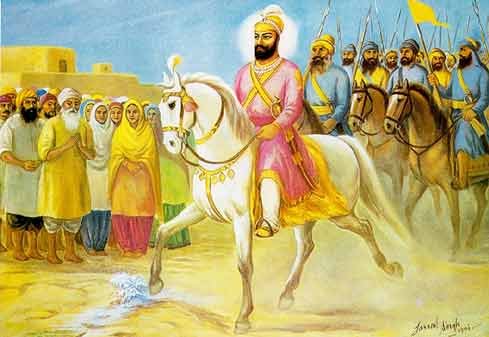
Guru Hargobind Sahib Ji (June 19, 1595 – March 3, 1644), the sixth Guru of the Sikhs, is one of the most iconic and transformative figures in Sikh history. After the martyrdom of his father, Guru Arjan Dev Ji, Guru Hargobind Sahib Ji ushered in a new era—where devotion met valor, spirituality blended with sovereignty, and nonviolence found its counterbalance in the righteous use of arms.
He was the embodiment of the “Saint-Soldier” philosophy, establishing the concept of Miri-Piri, which symbolized the dual responsibility of spiritual enlightenment (Piri) and worldly justice (Miri).
Early Life and Family
Guru Hargobind Sahib Ji was born on June 19, 1595, in Vadali, near Amritsar, to Guru Arjan Dev Ji and Mata Ganga Ji. Before his birth, Mata Ganga Ji, on Guru Arjan’s instructions, humbly sought the blessings of the revered Bhai Buddha Ji. The divine prophecy was made:
“A son shall be born who will wear the sword and lead like a king.”
This child would later reshape Sikh identity forever.
Ascension to Guruship
After the martyrdom of Guru Arjan Dev Ji in 1606, Guru Hargobind Sahib Ji assumed the spiritual leadership of the Sikhs at just 11 years old. But unlike previous Gurus, he took a radically different approach.
Instead of donning the humble garb of a saint, he wore royal robes and adorned two swords representing:
- Miri (temporal power)
- Piri (spiritual authority)
This symbolic act marked a seismic shift in the Sikh worldview—from passive tolerance to active resistance against tyranny.
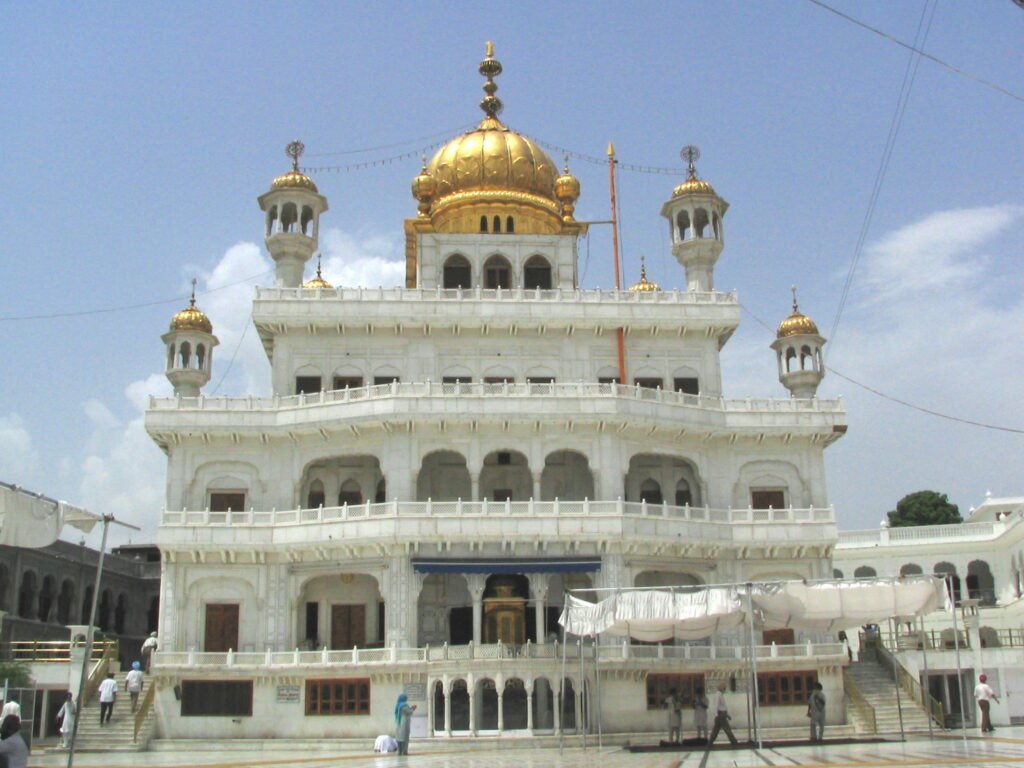
Foundation of Akal Takht – The Throne of the Timeless One
In 1609, Guru Hargobind Sahib Ji established the Akal Takht Sahib, directly opposite the Harmandir Sahib (Golden Temple) in Amritsar. Unlike religious altars meant for prayers, Akal Takht was a sovereign seat—a court of justice, a place of deliberation, and a command center for Sikh affairs.
Here, the Guru would sit with arms, discuss political matters, and lead his people in both spiritual and social guidance. It remains one of the five Takhts (temporal thrones) of Sikhism to this day.
Embracing the Sword – Rise of the Saint-Soldier
Guru Hargobind Sahib Ji’s most defining legacy is the creation of the Saint-Soldier (Sant-Sipahi) identity. He trained Sikhs in martial arts, archery, swordsmanship, and horsemanship, preparing them to defend not just themselves but also the oppressed.
He formed a standing army and constructed fortresses and cantonments. This transformation wasn’t an act of aggression but a defensive measure—a spiritual and ethical necessity after his father’s brutal martyrdom.
His message was clear:
“Righteous war in the defense of truth and justice is no sin.”
Conflict with the Mughals
Guru Hargobind Sahib Ji’s growing popularity and military posture alarmed the Mughal Empire, especially Emperor Jahangir and later Shah Jahan. Despite initial cordial relations, tensions flared. Multiple battles were fought, including:
- Battle of Amritsar (1628)
- Battle of Rohilla
- Skirmishes near Kiratpur Sahib
- Political intrigues involving Chandu Shah
Despite being vastly outnumbered, the Guru’s army emerged victorious, reflecting not just strategic brilliance but divine will and spiritual morale.
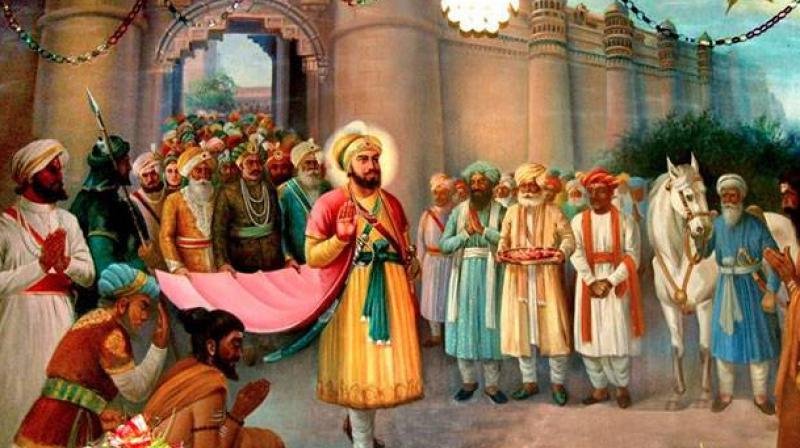
Imprisonment at Gwalior Fort
The Mughal emperor Jahangir, fearing Guru Hargobind Sahib Ji’s rising power, imprisoned him in Gwalior Fort. But even in captivity, Guru Ji’s divine presence inspired awe. He transformed the prison into a place of meditation and spiritual rejuvenation for other prisoners.
Most famously, 52 Hindu princes who had been unjustly detained sought his help. The Guru refused to leave until they were all freed. With diplomacy and determination, he secured their release.
He had a special robe made with 52 tassels, each held by a prince as they walked out together. This event is celebrated as:
Bandi Chhor Divas – “The Day of Liberation,” which coincides with Diwali and is celebrated with grandeur at the Golden Temple.
Spiritual Teachings
While Guru Hargobind Sahib Ji is renowned for his martial spirit, his spiritual depth was equally profound. His teachings and hymns, though fewer in number, are included in the Guru Granth Sahib Ji, emphasizing devotion, justice, and internal discipline.
One such verse states:
“Jin ke antar sach nivaas, tin kau upje shabad vigaas.”
(Those who have truth dwelling within, divine wisdom blossoms from their soul.)
He balanced the sword with scripture, demonstrating that the spiritual warrior must be anchored in divine love and moral integrity.
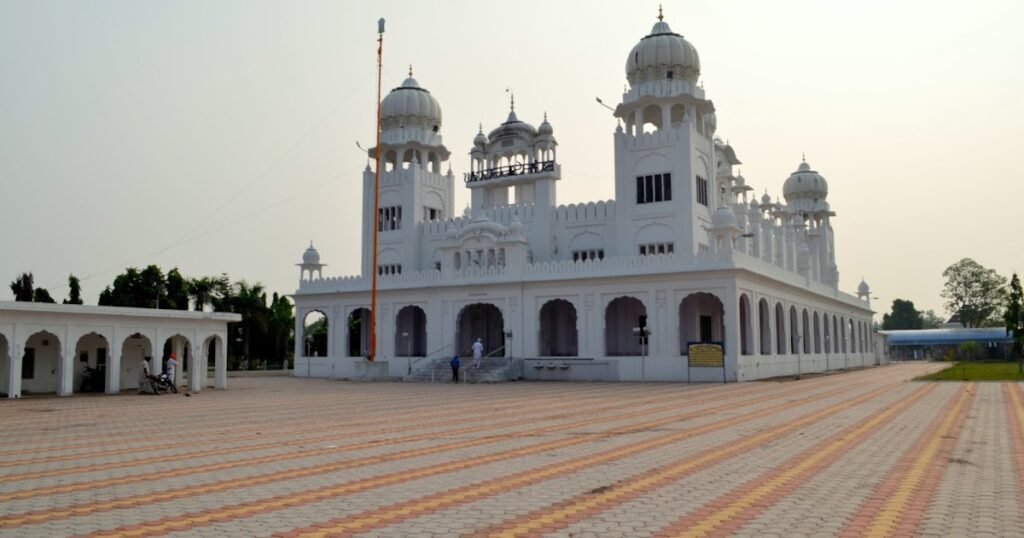
Kiratpur Sahib – Final Years
In his later years, Guru Hargobind Sahib Ji moved to Kiratpur Sahib, located in the Shivalik foothills (present-day Punjab). This tranquil town became a spiritual center, where the Guru spent his remaining days away from the political intrigues of the Mughal court.
On March 3, 1644, Guru Hargobind Sahib Ji merged with the Divine Light. Before his passing, he appointed his grandson, Guru Har Rai Sahib Ji, as the seventh Sikh Guru.
Legacy of Guru Hargobind Sahib Ji
Guru Hargobind Sahib Ji redefined what it meant to be a Sikh. His legacy can be seen in every aspect of the faith:
- Miri-Piri Philosophy – The dual responsibility of spiritual elevation and social-political activism.
- Saint-Soldier Identity – A Sikh must be humble yet courageous, peaceful yet prepared to defend.
- Defense of Religious Freedom – He fought not for political power, but to protect the rights of all faiths and communities.
He laid the foundation for future Gurus, particularly Guru Gobind Singh Ji, who would later formalize the Khalsa—the warrior-saint order.
Guru Hargobind Sahib Ji in Today’s World
Guru Hargobind Sahib Ji’s message is more relevant than ever in today’s world of rising injustices, intolerance, and moral confusion. His life teaches us:
- Stand up for the truth, even when it’s hard.
- Defend the weak, regardless of caste, creed, or religion.
- Be fearless, but stay grounded in humility and devotion.
Final Reflection
Guru Hargobind Sahib Ji was more than a leader—he was a visionary who showed the world that spirituality and sovereignty are not mutually exclusive. In his life, the sword never overshadowed the scripture. He didn’t preach war; he preached the righteous courage to uphold justice and truth.
His life bridges the contemplative calm of Guru Nanak with the warrior spirit of Guru Gobind Singh, making him one of the most pivotal Gurus in Sikh history.
He is the roar behind the Sikh spirit, the shield of the helpless, and the sword of righteousness.